
Modeling Effective Leadership
August 8, 2017
By Patricia Marrone Bennett
 At RDA, we know that effective leaders help unify their teams around a shared vision, which can increase staff engagement in and excitement for their work. We also know that leadership can be shared across all levels as an organization strives to fulfill its mission.
One of the primary functions of a leader is to model the way. This means that leaders behave in all ways that they expect others to behave. Leaders walk their talk and they lead by example. There should be no contradictions between what a leader says and what they do, because credibility is the foundation of leadership.
We also know that leaders must be role models and always demonstrate a commitment to those that surround them. They demonstrate loyalty and be respectful if they expect people to remain loyal to them and to always be honest. Being respectful of even those who you disagree with is a behavior that signals how others in an organization are expected to constructively approach conflict.
Finally, we have learned that how leaders communicate is an essential ingredient to their success. A good leader practices active listening and limits their own words. A leader must frequently ask questions and rarely make declarations. Leaders use descriptive language rather than evaluative language, especially in problem solving.
These traits form the basis of our strengths-based leadership work with our clients. Often, we have found that organizations already have the leadership skills needed to accomplish their goals. To build these skills within an organization, RDA partners with our clients to provide training, coaching, and other services to support the identification and development of leaders at all levels.
Of course, one other trait of a leader is admitting that you don’t know everything. So with that in mind, we are always working to learn more about what makes a great leader. What are your thoughts?
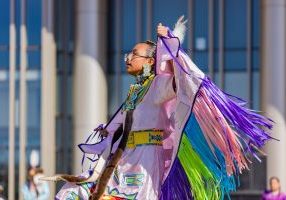
Honoring Indigenous Justice on Indigenous Peoples’ Day 2025
RDA Consulting observes Indigenous Peoples’ Day annually in place of the Columbus Day Federal holiday. First observed in Berkeley, California in 1992, the celebration of Indigenous Peoples’ Day has spread across the United States. Today, 17 states, the District of Columbia, Puerto Rico, and numerous localities nationwide celebrate Indigenous Peoples’ Day on the second Monday…

Supporting Juneteenth and Abundant Opportunities
We know that poverty disproportionately affects Black women and children in the US, which compounds disparities in maternal and child health. These disparities, an effect of systemic racism, are further exacerbated by social and economic stressors. The results of poverty, including lack of safe housing and access to healthy food, and the stress created by…